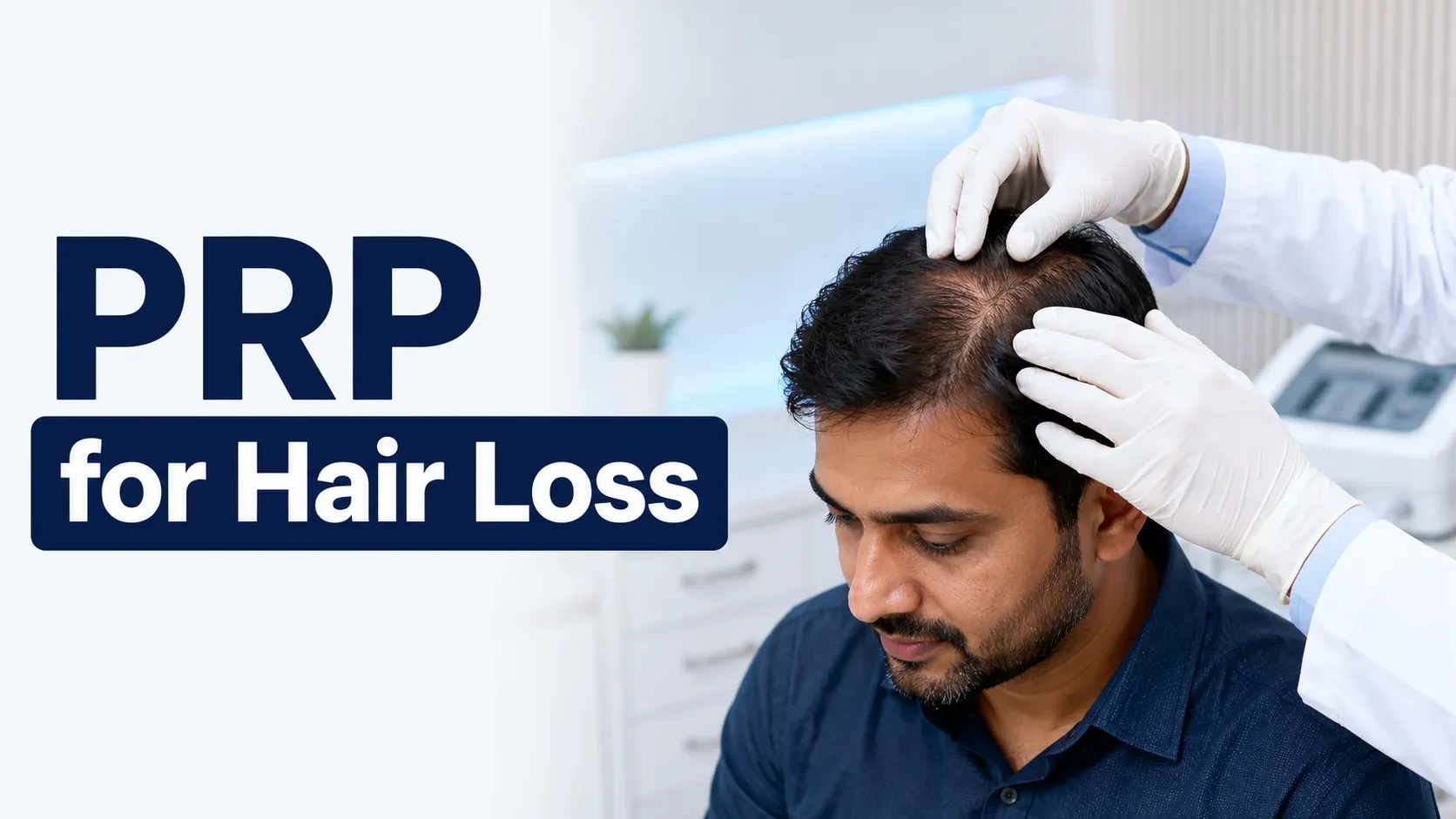
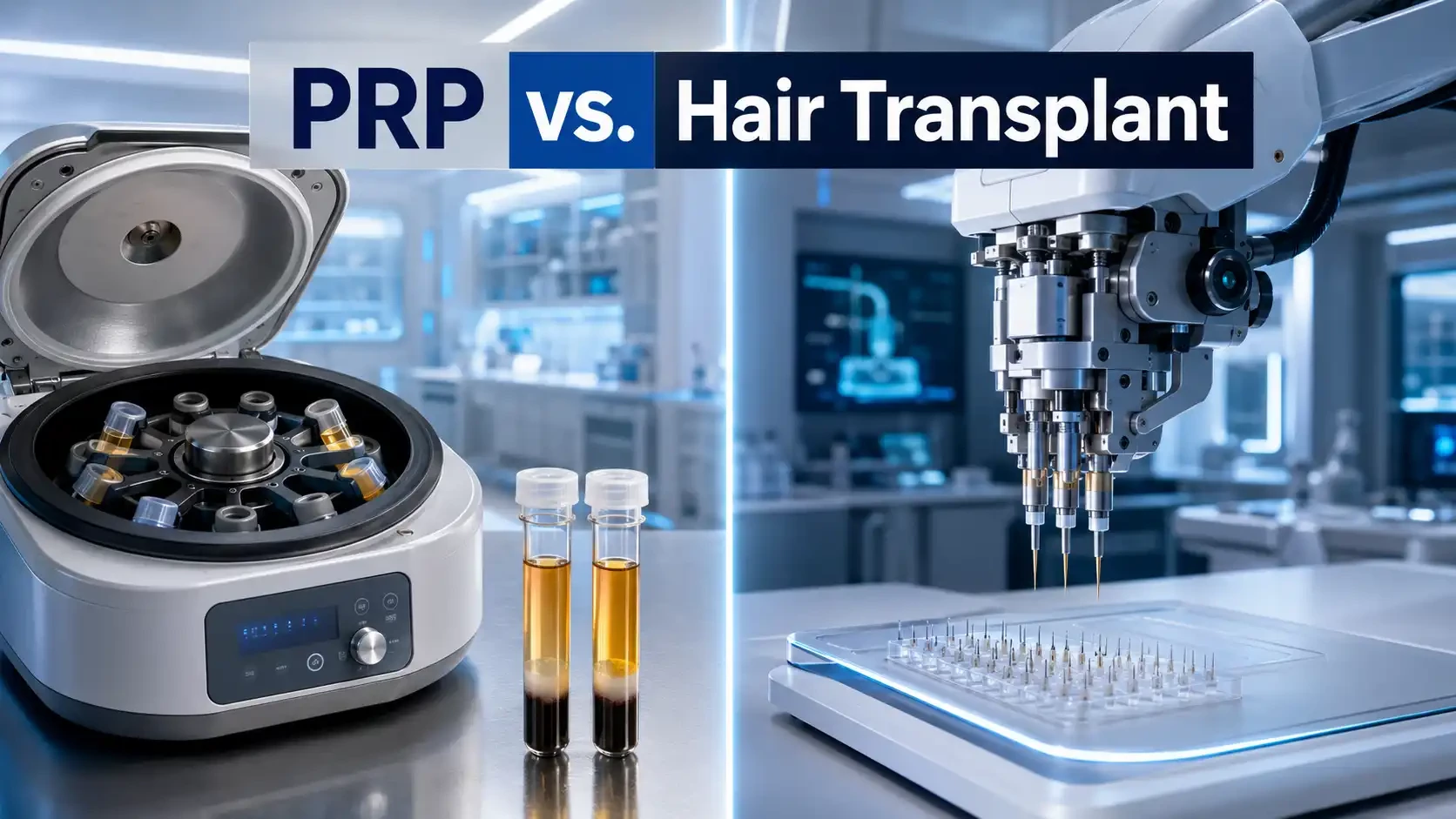

PRP vs Hair Transplant in Bangladesh: Which Hair Loss Treatment Is Right for You?
 At a Glance
PRP Supports existing follicles | TRANSPLANT Moves donor follicles | DECISION Diagnosis and hair-loss stage |
★ | QUICK TAKEAWAY: PRP and hair transplantation have different roles. PRP is a non-surgical treatment option that may be considered for selected patients with existing miniaturized follicles. A transplant is a surgical procedure that redistributes donor follicles to a recipient area. Neither option should be chosen before a proper diagnosis. |
✓ | KEY POINT: Hair-loss treatment should be planned for the future, not only for today’s hairline. A responsible provider explains what may happen if natural hair continues to thin. |
! | SAFETY NOTE: PRP is a medical procedure. It should be recommended only after proper assessment by a qualified registered doctor, with sterile single-use consumables and written aftercare. |
হেয়ারলাইন পাতলা হলে অনেকেই ভাবেন, PRP নেবেন নাকি হেয়ার ট্রান্সপ্লান্ট করবেন। কিন্তু এই দুটি চিকিৎসার উদ্দেশ্য ও পদ্ধতি আলাদা। PRP বিদ্যমান দুর্বল ফলিকলকে সহায়তা করার জন্য বিবেচিত হতে পারে, আর হেয়ার ট্রান্সপ্লান্টে ডোনার এরিয়া থেকে ফলিকল স্থানান্তর করা হয়। সঠিক সিদ্ধান্তের জন্য চুল পড়ার কারণ, পর্যায়, ডোনার হেয়ার এবং দীর্ঘমেয়াদি পরিকল্পনা মূল্যায়ন জরুরি।
PRP and hair transplantation have different roles. PRP is a non-surgical treatment option that may be considered for selected patients with existing miniaturized follicles. A transplant is a surgical procedure that redistributes donor follicles to a recipient area. Neither option should be chosen before a proper diagnosis.
When PRP may fit
PRP may be considered when thinning is early or moderate and follicles are still present. It does not replace follicles in a smooth, long-standing bald area where follicles are no longer active.
When transplant may fit
A transplant may be assessed for stable pattern hair loss with enough suitable donor hair. A surgeon should evaluate donor density, hair characteristics, expected future loss, and whether medical treatment is also needed.
Downtime and maintenance
PRP usually involves a short clinic visit and limited downtime. Hair transplantation involves surgery and recovery. Both may require follow-up, and underlying pattern hair loss can continue after either procedure.
Why diagnosis comes first
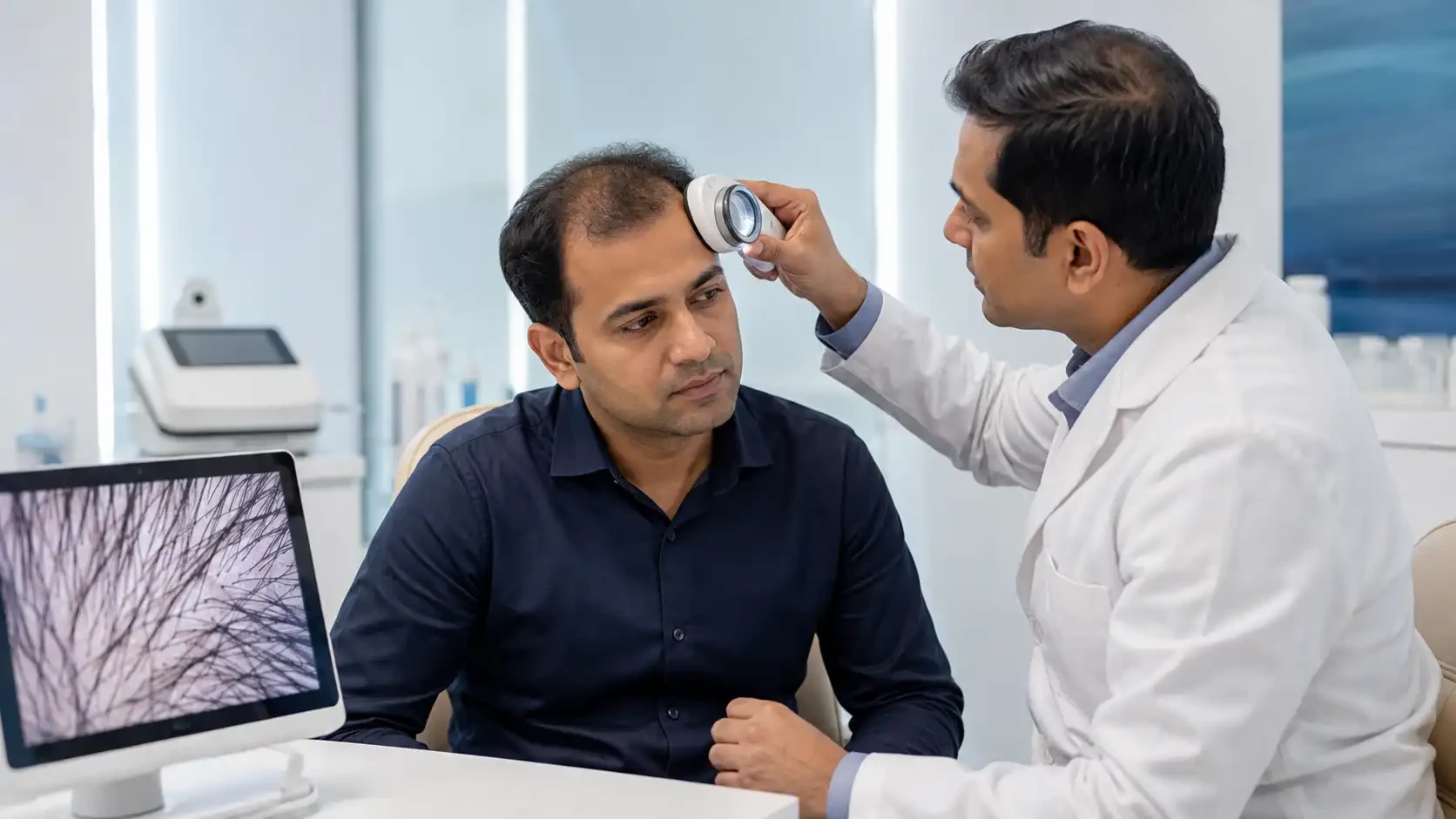
Telogen effluvium, alopecia areata, scalp disease, nutritional deficiency, and thyroid-related hair loss need different treatment. Starting PRP or surgery without identifying the cause can delay appropriate care.
Can they be combined
Some clinicians may consider PRP as part of a wider plan before or after transplantation. Whether it is appropriate depends on the patient, the surgical plan, and the treating doctor’s judgment.
Decision checklist
Ask for a scalp diagnosis, an honest estimate of likely benefit, a discussion of alternatives, and a written total-cost plan. Avoid any provider who guarantees a permanent or perfect result.
Myth vs Fact
MYTH PRP and hair transplant do the same job. | FACT PRP supports existing follicles; transplantation moves suitable donor follicles. |
Conclusion and Call to Action
PRP may be considered for selected patients, but the right treatment starts with a proper diagnosis and a qualified clinician. If you are considering PRP in Bangladesh, arrange a consultation, disclose your medical history, ask about risks and realistic outcomes, and request a clear written treatment plan before proceeding.
Patient Checklist Before You Book
· Confirm the diagnosis and the doctor’s specialty.
· Ask who will perform the procedure and how sterility is maintained.
· Disclose all medicines, allergies, past illnesses, and relevant blood-test issues.
· Request a written session plan, total expected cost, aftercare, and review date.
Frequently Asked Questions
Can PRP replace a hair transplant?
Not always. PRP and transplantation do different jobs; a scalp assessment is needed to decide which option fits the stage of hair loss.
Can pattern hair loss continue after treatment?
Yes. Underlying pattern hair loss may continue, so long-term medical management and follow-up can still be needed.
READY FOR THE NEXT STEP? Consult a qualified registered doctor, confirm your diagnosis, and request a clear written treatment plan before deciding. |
Original Medical Reference
American Academy of Dermatology, “Hair loss: Diagnosis and treatment.” https://www.aad.org/public/diseases/hair-loss/treatment
Medical disclaimer: This content is educational and not a diagnosis, prescription, or a guarantee of treatment results. Consult a qualified registered doctor for personalised advice.