_1785426678.webp)
_1785426682.webp)

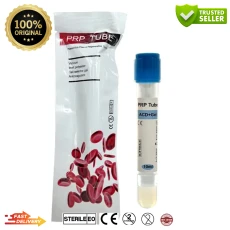
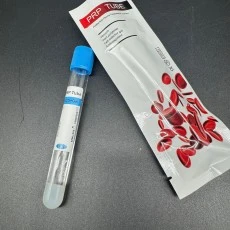
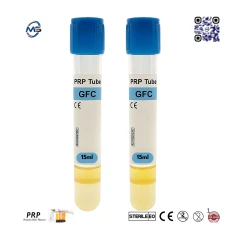
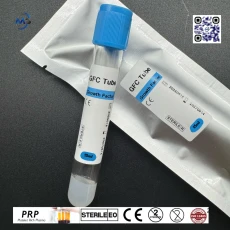
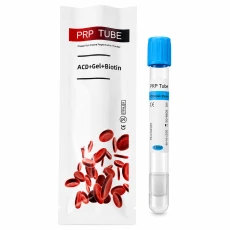
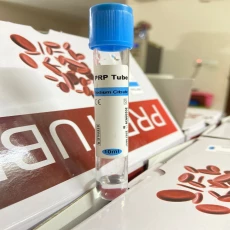
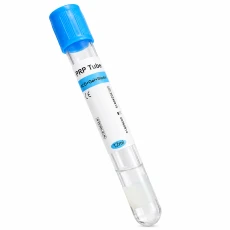
PRP Tube – ACD + Gel + Biotin 10ml | Sterile PRP Blood Collection Tube
PRP= ACD+GEL+BIOTIN 10ML
Clinic Grade
Product
Delivery
Payment
Bangladesh
Delivery
Key Features
The PRP Tube – ACD + Gel + Biotin (10ml) is a premium-quality, crystal-clear sterile medical tube designed for effective Platelet-Rich Plasma (PRP) preparation. It contains ACD (Anticoagulant Citrate Dextrose) to prevent blood clotting, separation gel for clear plasma isolation, and Biotin (Vitamin B7) to boost cell regeneration and therapeutic results.
This tube is CE and ISO 13485 certified, ensuring international medical-grade safety and performance. It is widely used by aesthetic professionals, dermatologists, and orthopedic specialists to improve hair restoration, skin rejuvenation, and tissue healing outcomes.
Applications / Uses:
✔️ Hair PRP Therapy – Strengthens roots, reduces hair fall
✔️ Skin Rejuvenation – Fights aging, improves skin texture
✔️ Facial Aesthetics – Acne scars, fine lines, glow therapy
✔️ Joint & Muscle Healing – Aids orthopedic PRP treatments
✔️ Post-Surgical Recovery & Cell Regeneration
Why Choose Us?
✅ 3-in-1 Formulation: ACD + Separation Gel + Biotin
✅ Sterile, Pyrogen-Free, Single-Use
✅ ISO 13485 & CE Certified
✅ Crystal Clear 10ml Tube for Easy Plasma Observation
✅ Enhanced PRP Yield & Quality
✅ Clinically Trusted for Hair, Skin & Joint Treatments
✅ Compatible with Most Centrifuge Machines
How to Use PRP Tube – ACD + Gel + Biotin 10 mL
Advanced Step-by-Step PRP Preparation Procedure
The PRP Tube – ACD + Gel + Biotin 10 mL is designed for professional preparation of platelet-rich plasma (PRP) from autologous whole blood. The tube contains an anticoagulant system and separation gel intended to facilitate separation of blood components during centrifugation.
Important: This procedure is intended for trained healthcare professionals. Always follow the product's approved Instructions for Use (IFU), validated centrifuge protocol, applicable infection-control requirements, and local medical regulations. Centrifugation parameters should not be transferred from another PRP tube or centrifuge without validation.
1. Prepare the Work Area
Before starting:
Perform the procedure using appropriate aseptic technique.
Prepare sterile blood-collection equipment.
Wear appropriate personal protective equipment.
Confirm that the tube is intact and within its expiry date.
Check that the tube is correctly labeled.
Verify that the centrifuge is compatible with the tube dimensions and rotor.
Ensure the centrifuge rotor is clean and correctly installed.
Do not use a tube if it is damaged, leaking, contaminated, or otherwise unsuitable for use.
2. Patient and Blood Collection Preparation
Perform venipuncture according to the healthcare professional's standard blood-collection procedure.
Collect the required volume of whole blood according to the tube manufacturer's validated blood-to-anticoagulant ratio.
Important
The anticoagulant-to-blood ratio is critical. Do not intentionally overfill or underfill the tube unless the manufacturer's IFU specifically permits it.
ACD-A is widely used for PRP preparation because citrate-based anticoagulation helps prevent premature platelet activation and aggregation.
3. Collect Blood into the PRP Tube
Confirm the patient's identification and tube label.
Perform venipuncture using an appropriate sterile collection system.
Allow blood to enter the PRP tube according to the manufacturer's collection instructions.
After collection, immediately mix the blood gently with the anticoagulant.
Use gentle inversion rather than vigorous shaking.
For ACD-containing blood collection tubes, published PRP methodology commonly recommends approximately 5–10 gentle inversions to ensure adequate mixing and reduce the possibility of microclot formation.
4. Allow the Blood to Equilibrate
Follow the manufacturer's validated processing time after blood collection.
Do not automatically apply a waiting period from another manufacturer's PRP tube.
The time between blood collection and centrifugation can influence the characteristics of the resulting PRP, and commercial PRP systems use different validated protocols.
5. First Centrifugation – Separation Spin
Place the tube into the centrifuge using the manufacturer's validated centrifugation program.
Objective of the first spin
The first centrifugation separates the major blood components according to their density.
After centrifugation, the blood generally separates into:
Top: Plasma fraction
Middle: Buffy-coat/interface containing platelets and leukocytes
Bottom: Red blood cell fraction
The exact appearance and position of these layers depend on the tube design, gel characteristics, blood composition, rotor geometry, and centrifugation conditions.
6. Do Not Judge RPM Alone
For PRP preparation, RCF (×g) is scientifically preferable to RPM because the same RPM can generate different centrifugal forces on different centrifuges depending on rotor radius.
Therefore:
Do not copy an RPM value from another centrifuge without confirming the rotor radius and calculating the corresponding RCF.
The basic relationship is:
RCF = 1.118 × 10⁻⁵ × r × RPM²
where:
RCF = relative centrifugal force (×g)
r = rotor radius in centimeters
RPM = revolutions per minute
7. Inspect the Separation
After centrifugation:
Allow the centrifuge to stop normally.
Avoid unnecessary agitation of the tube.
Carefully remove the tube.
Inspect the separated blood fractions.
Identify the plasma layer and the interface around the separation gel.
Do not disturb the separated layers unnecessarily.
8. PRP Recovery
The exact recovery method depends on the design of the PRP tube.
Where the validated tube protocol requires transfer of the platelet-containing plasma fraction:
Prepare a sterile transfer device.
Carefully collect the designated PRP fraction.
Avoid unnecessary aspiration of the red-cell layer.
Avoid excessive disturbance of the gel/interface.
Transfer the PRP into the designated sterile receiving device if required.
The desired PRP can be relatively leukocyte-poor or leukocyte-rich depending on which cellular fraction is collected. Different collection strategies produce different PRP compositions.
9. Optional Second Centrifugation
A second centrifugation may be used when the validated protocol calls for a higher platelet concentration.
The general principle of a double-spin method is:
First spin → separation of RBCs from plasma/platelets
Second spin → concentration of platelets
Published recommendations for dermatological PRP describe first-spin forces around 100–300 ×g for 5–10 minutes and second-spin forces around 400–700 ×g for 10–17 minutes, but these are literature recommendations—not universal settings for every commercial tube.
Therefore, the validated protocol for the specific tube and centrifuge should take priority.
10. PRP Concentration
Following the second spin, the platelet-containing fraction can be concentrated by removing an appropriate portion of platelet-poor plasma (PPP) and gently resuspending the platelet concentrate in the remaining plasma.
The final platelet concentration depends on:
Patient baseline platelet count
Initial blood volume
Tube design
Centrifugation force
Centrifugation time
Plasma volume retained
Whether leukocytes are intentionally included
Recovery efficiency
There is no single PRP concentration that is universally optimal for every clinical application.
11. Gentle Resuspension
If a platelet pellet is produced:
Do not vigorously shake the tube.
Gently resuspend the platelet concentrate in the retained plasma.
Ensure the concentrate is adequately mixed before clinical use.
Avoid unnecessary mechanical trauma that could prematurely activate platelets.
12. Activation
Activation requirements depend on the intended clinical application and the clinician's validated protocol.
For some soft-tissue applications, pre-activation may not be necessary because tissue collagen can naturally contribute to platelet activation after administration.
Do not add calcium chloride, thrombin, or another activating agent unless the validated clinical protocol specifically requires it.
13. Final PRP Quality Check
Before use, the trained healthcare professional should verify:
Visual inspection
Appropriate plasma/PRP appearance
No unexpected clot formation
No visible foreign material
No evidence of contamination
No abnormal tube leakage or damage
Optional laboratory quality assessment
For advanced clinical or research workflows, platelet and leukocyte counts may be measured before and after processing.
Useful parameters include:
Whole-blood platelet count
Final PRP platelet count
Whole-blood leukocyte count
Final PRP leukocyte count
Final PRP volume
Platelet recovery
Platelet concentration factor
This allows the preparation process to be objectively evaluated rather than relying only on visual appearance.
14. Use the Prepared PRP
The prepared PRP should be handled according to the clinician's validated application protocol.
PRP is an autologous blood-derived product and should be handled using appropriate aseptic precautions.
The timing between preparation and administration should follow the validated protocol for the specific product and clinical application.
Advanced PRP Processing Flow
Patient assessment
↓
Aseptic blood collection
↓
Collect whole blood into ACD + Gel + Biotin PRP tube
↓
Gentle inversion for anticoagulant mixing
↓
Validated processing interval
↓
First centrifugation
↓
RBC / gel / plasma separation
↓
Identify platelet-containing fraction
↓
Recover PRP according to tube IFU
↓
Optional second centrifugation
↓
Concentrate platelet fraction
↓
Gentle resuspension
↓
Quality inspection / optional CBC analysis
Use according to validated clinical protocol
Important Centrifuge Guidance
Do not use a universal RPM setting.
PRP preparation is affected by rotor radius, centrifuge type, tube geometry, blood volume, centrifugation time, and the intended PRP composition.
For this reason, RCF (×g) should be used whenever possible, and the centrifuge setting should be validated for the specific PRP tube.
Example literature ranges
| Stage | Published PRP guidance |
|---|---|
| First spin | 100–300 ×g |
| First-spin duration | 5–10 min |
| Second spin | 400–700 ×g |
| Second-spin duration | 10–17 min |
These values are literature guidance, not the manufacturer's official setting for this particular 10 mL tube.
Safety & Handling
For trained healthcare professionals only.
Use aseptic technique.
Treat all blood and blood-contacting materials as potentially infectious.
Do not reuse the tube.
Do not use damaged or contaminated tubes.
Follow the manufacturer's storage conditions.
Follow the manufacturer's expiry date.
Dispose of used blood-contacting materials in appropriate biohazard/sharps waste containers.
Follow applicable local medical-device and infection-control requirements.
Important Note
PRP preparation does not have one universally standardized protocol. Published studies demonstrate substantial variation between preparation systems and centrifugation protocols. Therefore, the manufacturer's validated IFU and the specific centrifuge/tube combination should take precedence over generic internet protocols.
Customer Reviews
0.0
Frequently Asked Questions
Latest Reviews
You May Also Like