
Plasma Pen – Mole, Skin & Wart Remover
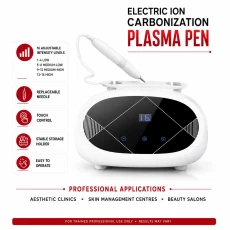
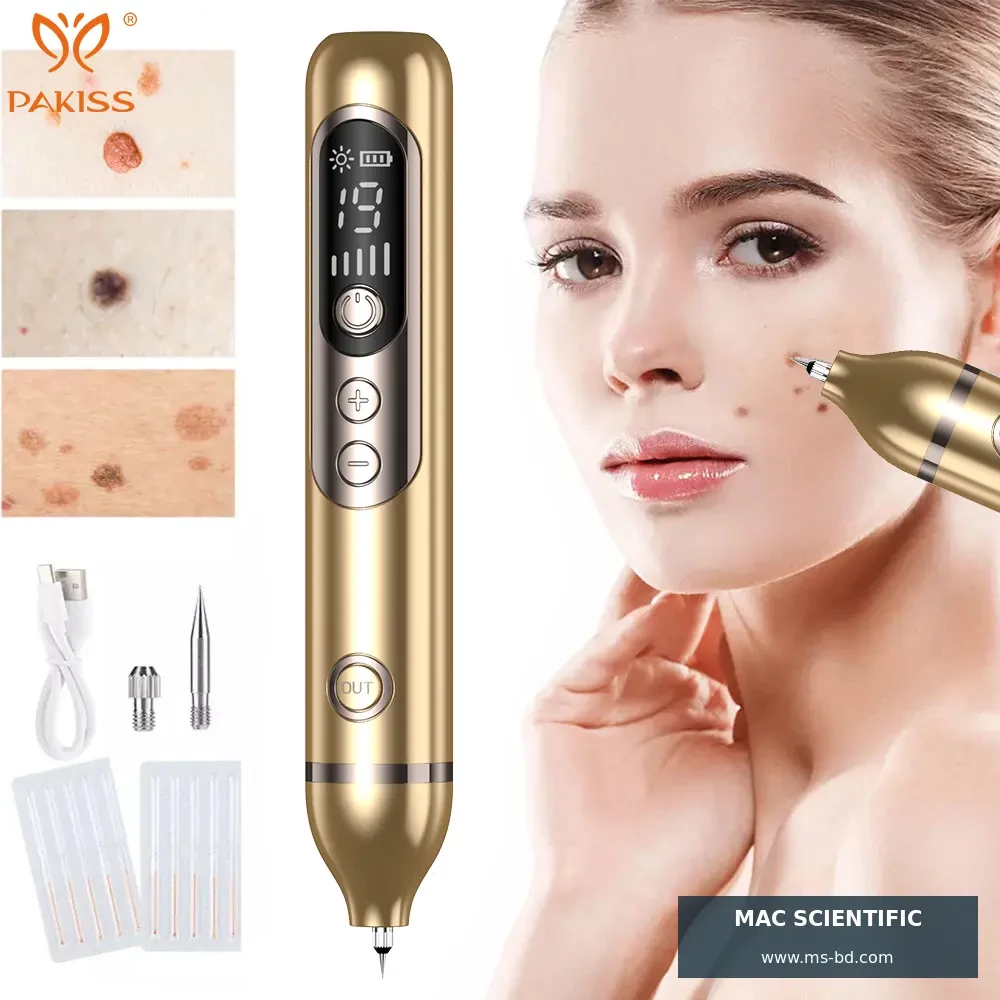
PAKISS 19-Level Plasma Pen is a rechargeable professional carbon-ion spot cautery device featuring an LCD status display, 19 adjustable output levels, integrated positioning light, fine and coarse probes, replaceable tips and USB charging. Intended only for trained professionals and for selected lesions already clinically confirmed as benign. It is not a laser device and is not recommended for unsupervised home use.
Clinic Grade
Product
Delivery
Payment
Bangladesh
Delivery
Key Features
The PAKISS 19-Level Plasma Pen is a portable professional spot-cautery device designed for controlled cosmetic procedures on selected, clinically assessed benign superficial lesions. It combines electric carbon-ion/plasma arc technology, 19 adjustable output levels, an LCD status display, positioning light, dual probe options and USB rechargeable operation.
The device should only be operated by a properly trained professional following clinical assessment, informed consent, infection-control procedures and the manufacturer’s instructions.
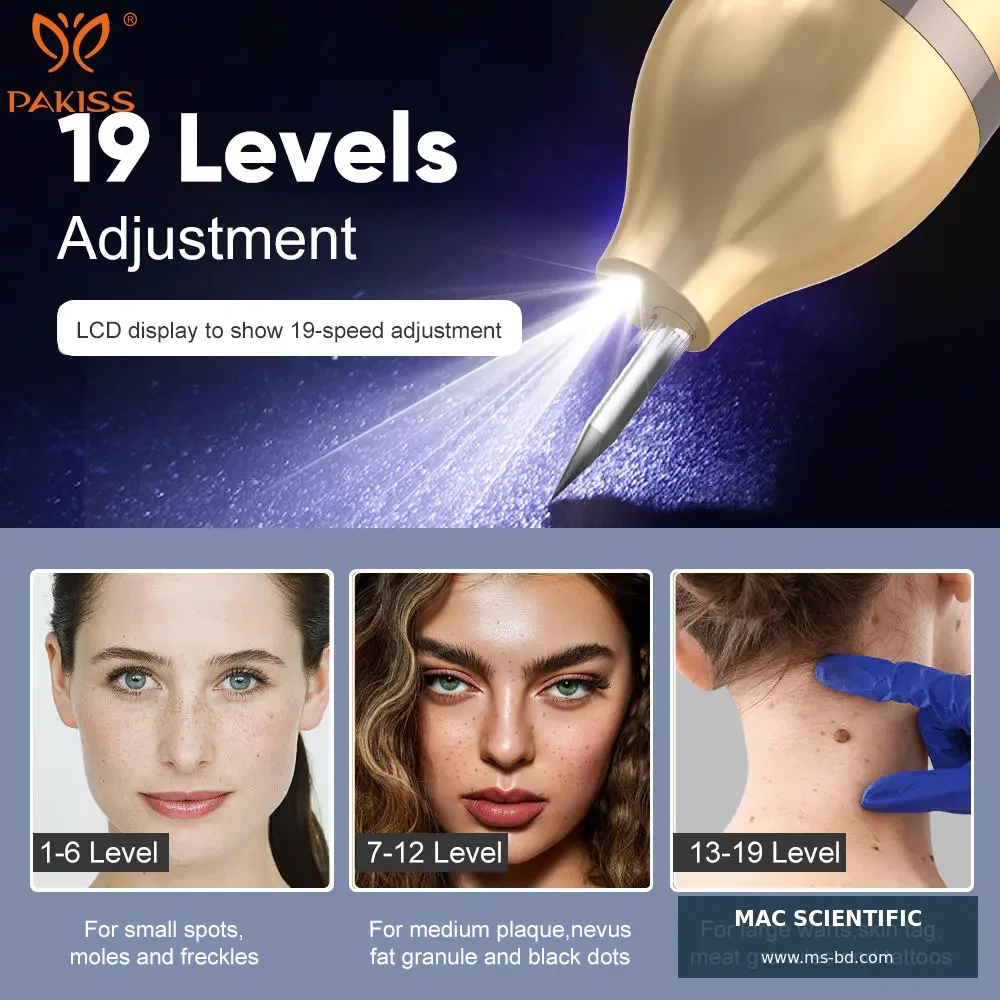
19 Adjustable Output Levels
The operator can increase or decrease the output across 19 available intensity levels. This provides controlled adjustment according to the professional’s assessment, selected probe, treatment area and manufacturer-approved protocol.
Intensity must never be selected solely according to the visible size of a lesion. Skin type, lesion diagnosis, location, depth, client history and risk of pigment change or scarring must also be considered.
LCD Digital Display
The integrated LCD display provides clear visual information, including the selected output level and battery status. The illuminated screen helps the operator confirm the current setting before activating the output.
Carbon-Ion Plasma Technology
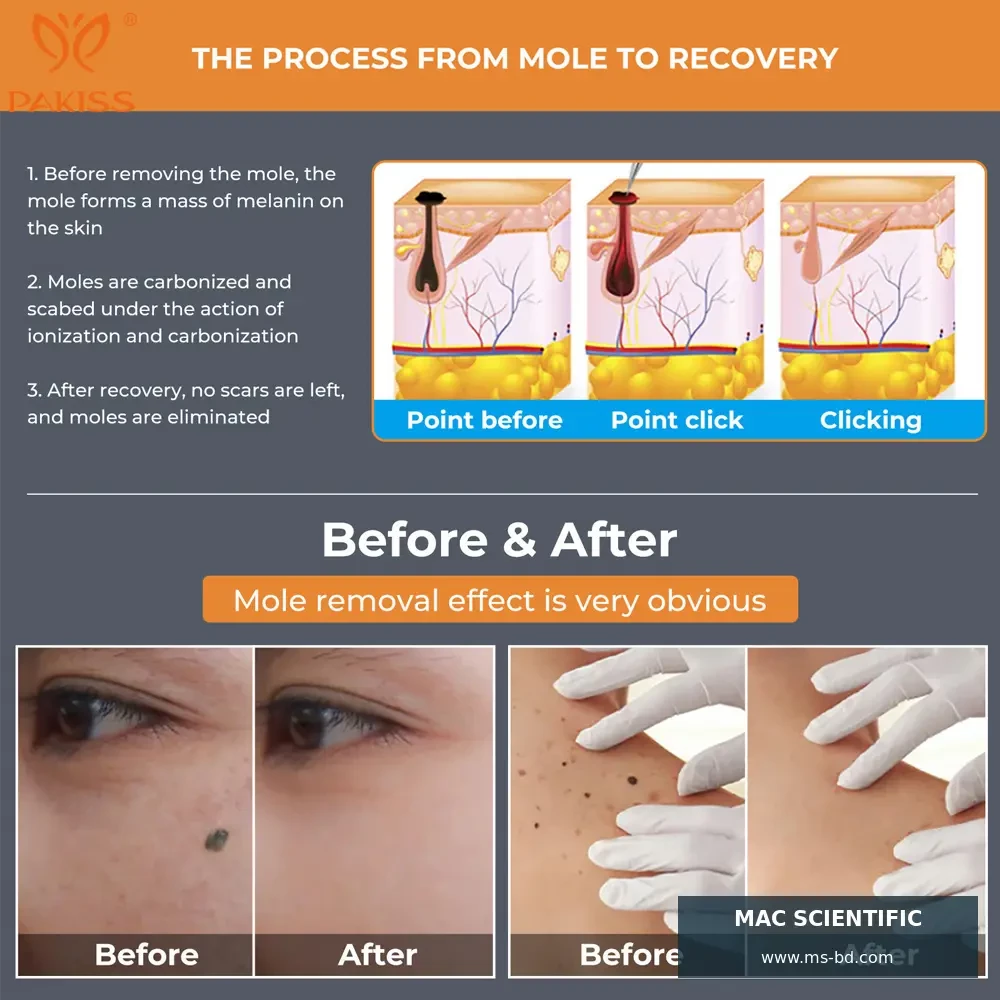
The device produces a small controlled electrical arc at the probe tip. This creates localized thermal action at the treatment point. The PAKISS pen is commonly called a plasma pen or mole-removal pen, but it is not a medical laser and should not be described as laser equipment.
Fine and Coarse Probe Options
- Fine probe: Designed for precise point-by-point professional work.
- Coarse probe: Intended for selected procedures requiring a wider contact area.
Probe selection and output level must be determined by a trained operator. Consumable tips that contact or penetrate skin should be sterile and used according to proper infection-control procedures.
Integrated Positioning Light
The built-in positioning light helps illuminate the intended treatment point. It supports more accurate placement of the probe but does not diagnose the lesion or make the procedure risk-free.
Rechargeable and Portable
A built-in rechargeable battery and USB charging connection allow convenient cordless operation. Its pen-shaped body is compact and easy to store or carry between professional treatment rooms.
Appropriate Professional Applications
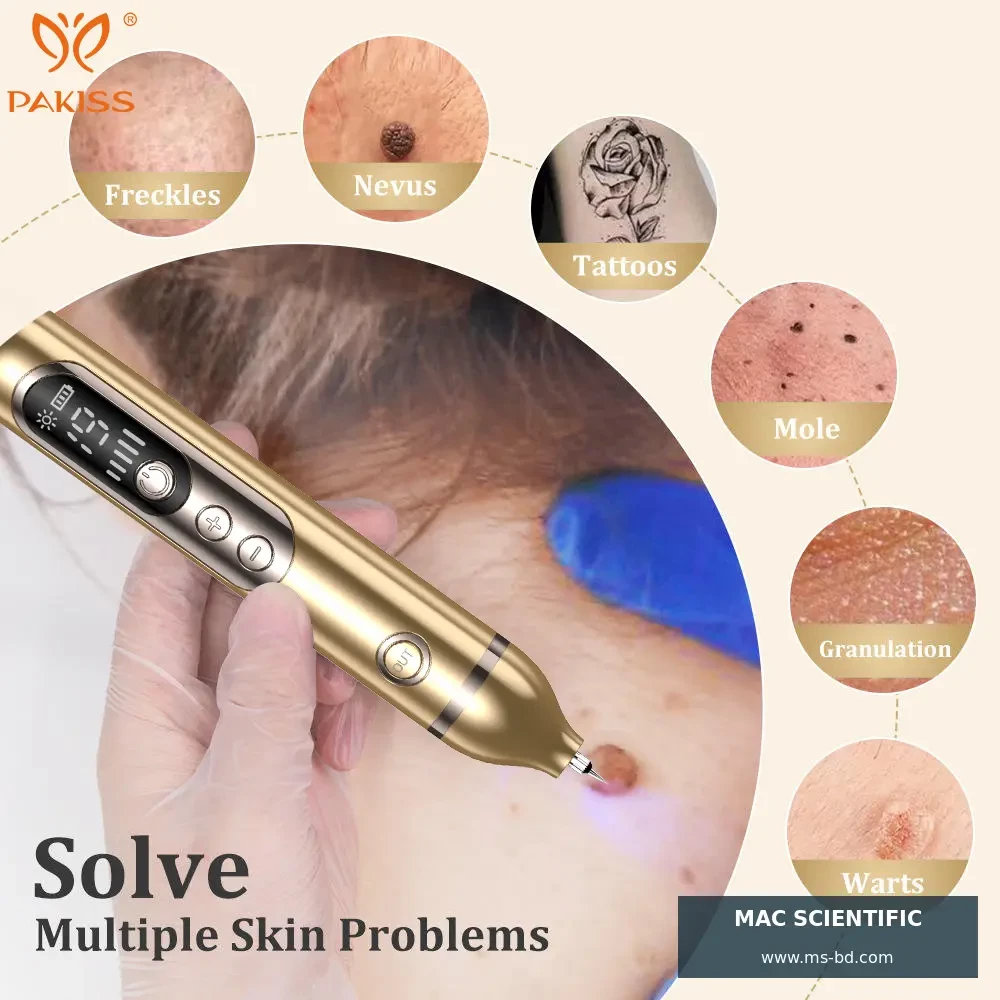
After a lesion has been examined and confirmed as suitable by a qualified healthcare professional, the device may be considered for selected benign cosmetic procedures involving:
- Certain benign skin tags
- Selected clinically diagnosed warts
- Other selected superficial benign lesions
- Professional precision spot cautery
Moles and pigmented lesions must be medically assessed before treatment. A new, changing, irregular, multicoloured, bleeding, painful or itching lesion must not be treated with this device and should be referred to a dermatologist.
Not a Tattoo-Removal Laser
This device should not be promoted as an alternative to professional Q-switched or picosecond tattoo-removal lasers. Attempting to burn tattooed skin can result in burns, scarring, infection and permanent pigment changes.
Available in Bangladesh
The PAKISS 19-Level Plasma Pen is available from Mac Scientific for dermatologists, aesthetic clinics and trained professionals in Bangladesh. Contact us for current price, stock, warranty, replacement probes and nationwide delivery information.
Professional-use warning: Incorrect operation can cause burns, bleeding, infection, delayed healing, scarring, hyperpigmentation or hypopigmentation. Results vary, and scar-free healing cannot be guaranteed.
| Specification | Details |
|---|---|
| Brand | PAKISS |
| Product type | Rechargeable carbon-ion/plasma spot cautery pen |
| Model | Confirm from physical label/manual |
| Technology | Electrical carbon ionization/plasma arc |
| Intensity levels | 19 adjustable levels |
| Display | LCD digital display |
| Display information | Output level and battery status |
| Guidance | Integrated positioning light |
| Controls | Power/menu, plus, minus and output activation |
| Probe options | Fine probe and coarse probe |
| Consumables | Replaceable fine needle tips |
| Power source | Built-in rechargeable battery |
| Charging | USB charging |
| Body material | ABS and PC |
| Colour | Gold |
| Portability | Handheld and cordless |
| Country of origin | China |
| Intended user | Trained and authorized professional |
| Warranty | Enter Mac Scientific’s actual policy |
| Unit | 1 piece |
1. Confirm the operator has suitable professional training.
2. Obtain a clinical diagnosis before treating any mole or pigmented lesion.
3. Screen the client for contraindications and healing risks.
4. Obtain documented informed consent.
5. Photograph and document the treatment area where appropriate.
6. Inspect the probe and device for damage.
7. Use sterile, single-use skin-contact consumables where required.
8. Prepare the treatment area using an appropriate clinical protocol.
9. Select the output only according to professional assessment and the manual.
10. Arrange suitable post-procedure monitoring and aftercare instructions.
• Never use this device for self-treatment or unsupervised home treatment.
• Never burn or remove an undiagnosed mole or pigmented lesion.
• Do not treat a lesion that is new, changing, bleeding, itching or irregular.
• Do not use on active infection, open wounds or inflamed skin.
• Do not use close to the eye without specialist training and protection.
• Do not use on mucous membranes or highly sensitive areas.
• Do not use it as a tattoo-removal laser.
• Do not reuse contaminated or single-use needles.
• Do not immerse the device in water or disinfectant.
• Stop immediately if unexpected tissue damage or device malfunction occurs.
Customer Reviews
0.0
Frequently Asked Questions
Latest Reviews
You May Also Like